
From America’s First Catholic Seminary to Downtown Baltimore’s Largest Green Space
St. Mary’s Park, the central green space of the Seton Hill neighborhood, occupies the former grounds of the first Roman Catholic seminary in the United States. Today, the park serves as a 3.4-acre public space, preserving pivotal landmarks in American architectural, religious, and African-American history.
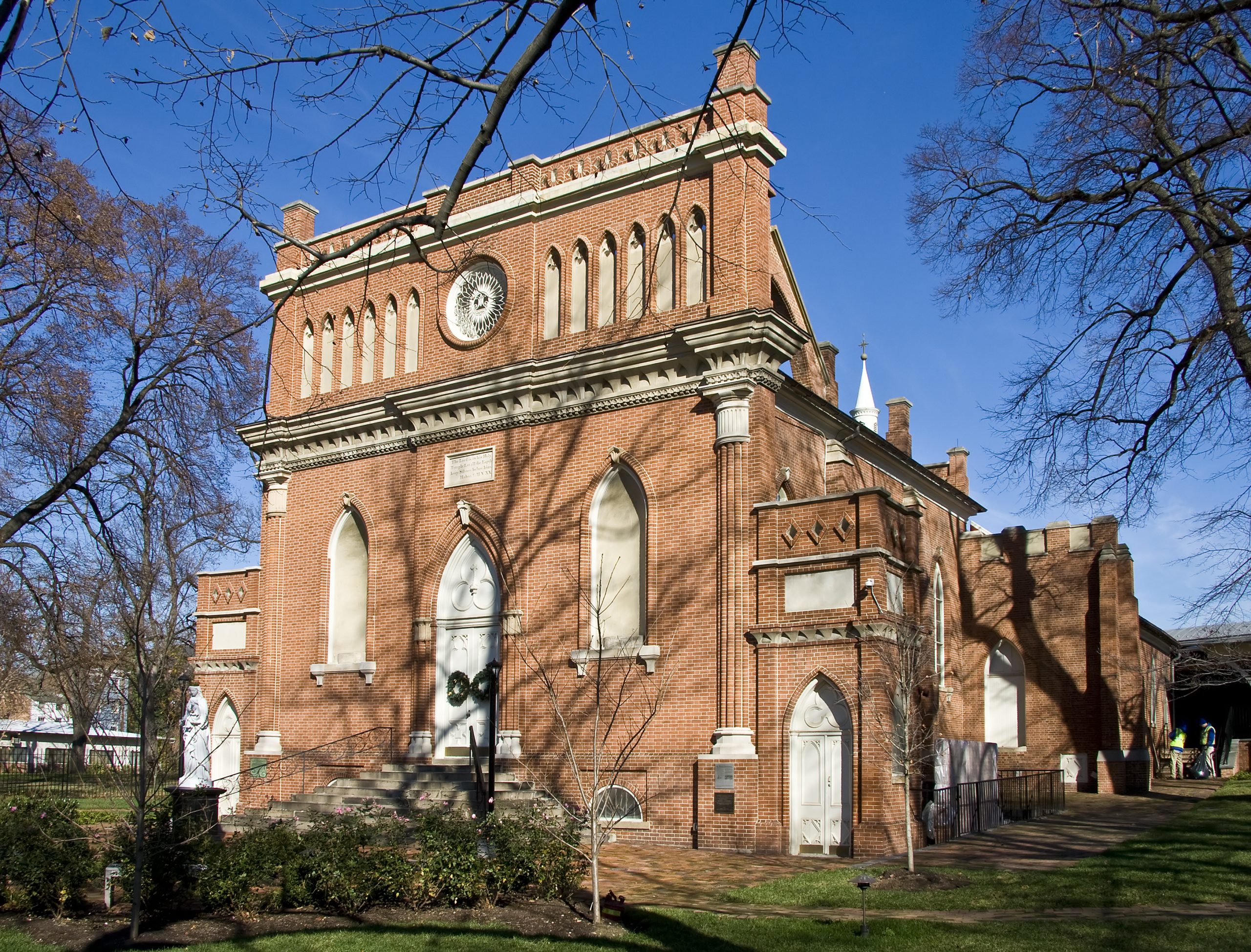
The Founding of St. Mary’s Seminary (1791)
The history of the site began in 1791 when French Sulpician priests, fleeing the French Revolution, arrived in Baltimore. They purchased the “One Mile Tavern” and its surrounding land on the edge of the city to establish St. Mary’s Seminary. This institution became the foundational training ground for Catholic clergy in the United States.
Architectural Landmarks (1806–1808)
As the seminary expanded, it commissioned the construction of a dedicated chapel. Designed by exiled French architect Maximilian Godefroy and constructed between 1806 and 1808, St. Mary’s Seminary Chapel remains on the park grounds today. It is recognized as the oldest Neo-Gothic (Gothic Revival) church building in the United States.
Adjacent to the chapel is the Mother Seton House. In 1808, Elizabeth Ann Seton—who would later become the first native-born American canonized as a saint, resided here for a year, establishing a school for girls and taking her initial vows before relocating to Emmitsburg, Maryland to establish the Sisters of Charity.
The Oblate Sisters of Providence (1829)
The site is a critical landmark in African-American history. The lower basement level of the seminary chapel, known as the Chapelle Basse, served as a spiritual center for Black Catholics, including many Haitian refugees. In 1829, Mary Elizabeth Lange and Rev. James Hector Joubert founded the Oblate Sisters of Providence in this space. It was the first successful Roman Catholic sisterhood in the world established by women of African descent. The Sisters provided essential education and social services to Baltimore’s early Black community.
Transition to a Public Park (1970s)
The seminary operated on the site for over 150 years. By the late 1960s, the institution had outgrown the aging complex and relocated to a new facility in the Roland Park neighborhood. In the 1970s, the primary seminary dormitories and academic buildings were demolished.
Rather than redeveloping the land for commercial or high-density residential use, the footprint of the demolished buildings was converted into a public park. The historic chapel and the Mother Seton House were preserved. Today, St. Mary’s Park is maintained through a partnership between Baltimore City Recreation and Parks and the Seton Hill Association, serving as the civic heart of the historic district.